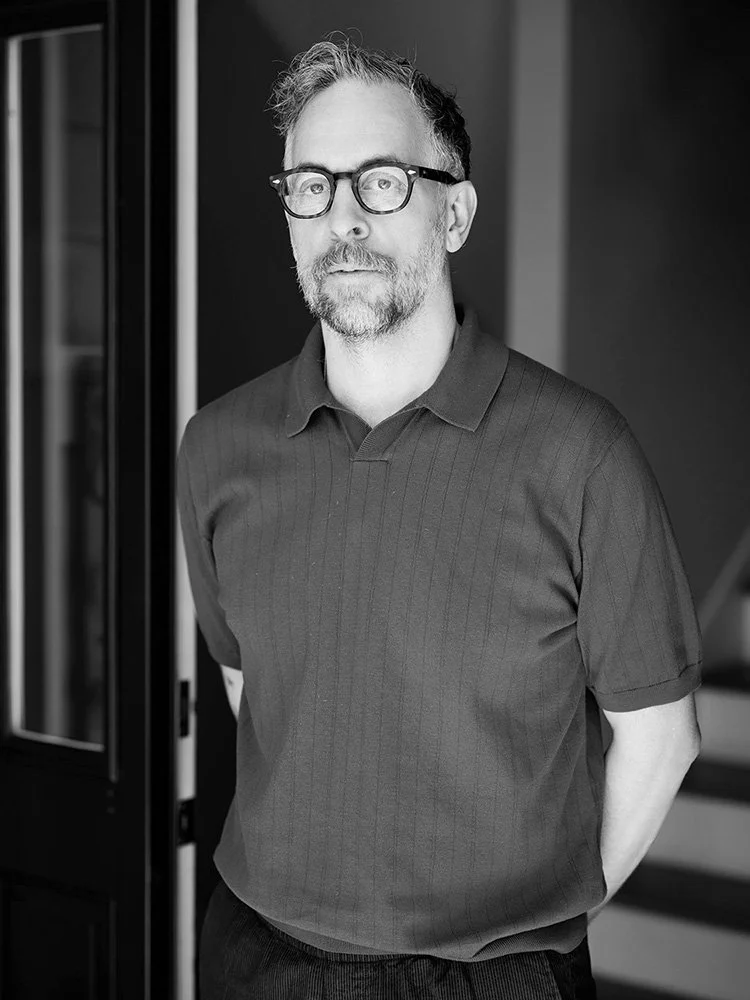
Wendell Berry died on August 31, at home, on the Henry County land his family had farmed since before he was born. He was 92. He wrote more than fifty books — poems, novels, essays — and for most of his life he wrote them by hand, then typed them on a manual typewriter he bought new in 1956 and never replaced. It is tempting, on the occasion of a death like this, to reach for the word legacy. I want to resist that word for a moment, because Berry spent sixty years arguing against exactly the kind of thinking legacy implies: that a life's value can be extracted, scaled, and carried off somewhere else. His whole case, in poem after poem, was that value doesn't travel. It stays where it's made, or it isn't real.
A Life Measured in One Place
Berry taught at New York University in his twenties, and by most measures of a literary career, he was exactly where a young writer was supposed to be. He left after two years and went home to Kentucky, to land his family had worked for seven generations, and he stayed there for the rest of his life. Friends warned him that leaving New York would cost him his career. He wrote, later, that he'd concluded the opposite: that a writer needs a place to belong to before he has anything worth writing about at all. Almost everything he published afterward — the Port William novels, the Mad Farmer poems, the Sabbath poems he wrote wandering his own fields on Sunday mornings — came out of that one piece of ground.
The Mad Farmer's Argument
Berry's recurring poetic voice, the persona he called the Mad Farmer, is a useful lens for what he was actually doing as a poet. The Mad Farmer isn't mad in the clinical sense; he's mad the way a person is called mad for refusing to go along with something everyone else has agreed to stop questioning. Berry used him to make arguments most poets wouldn't touch directly — against efficiency as a virtue, against the idea that a farm or a forest or a marriage is a resource to be optimized rather than a relationship to be kept. It is not fashionable, in most literary circles, to write poems that function as arguments. Berry never seemed to notice or care that it wasn't fashionable. He believed a poem could carry a conviction and still be a poem, and he built an entire body of work on proving it.
He believed a writer needs a place to belong to before he has anything worth writing about at all.
Refusing the Machine
Berry's most argued-over piece of writing was never a poem. It was a short essay called “Why I Am Not Going to Buy a Computer,” published in 1987, in which he explained, calmly and at length, why he intended to keep writing by hand. It generated more angry letters to the magazine that printed it than almost anything the editors had seen. Read now, the essay isn't really about computers. It's about the question Berry asked of every new tool that came along: does this make the thing I'm doing better, or does it just make it faster? He didn't think those were the same question, and he never accepted an answer that assumed they were. It is a fairly direct line from that essay to the small, insistent stubbornness of a press that still hand-binds its fine editions and still reads every submission itself.
What a Small Press Owes Him
I don't think it's an overstatement to say that Berry's whole career was an argument for scale — for the idea that something done well, on a scale a single person can actually attend to, is worth more than the same thing done bigger and worse. That is, more or less, the whole premise on which a press like this one operates: 250 copies instead of 25,000, a book you can still hold the whole shape of in your head, an editorial process that doesn't scale because it was never supposed to. Berry farmed the same ground his family had farmed for generations rather than buy more of it. We publish a handful of books a year rather than chase a bigger list. Neither choice makes headlines. Both, I think, are the same choice, made in different fields. He is gone now, and the farm in Henry County will presumably pass to someone else's care. What he leaves behind, for anyone willing to read him slowly, is proof that staying in one place, working at a scale you can actually see, was never the smaller choice. It was the harder one.