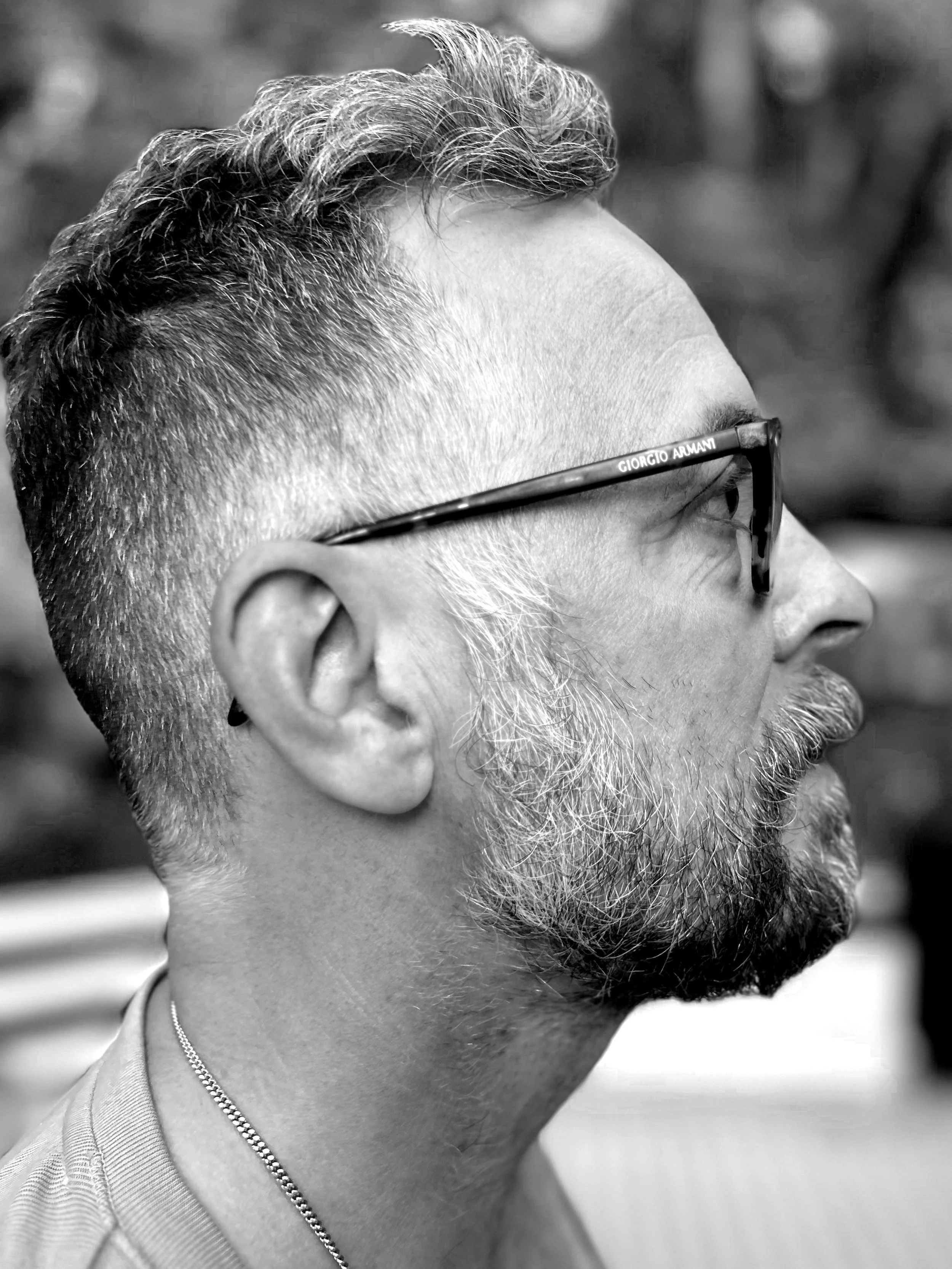
Ocean Vuong arrived in contemporary poetry with a speed that is unusual even for a celebrated debut. His first full collection, Night Sky with Exit Wounds, won the T.S. Eliot Prize and a wave of recognition that placed him, almost immediately, among the most discussed poets of his generation. He went on to write a best-selling novel, On Earth We're Briefly Gorgeous, and to receive a MacArthur Fellowship. For a poet still young, working in a form that rarely reaches large audiences, the scale of the response was striking. It is worth understanding what readers were responding to.
The arrival
Part of the answer is biography, though Vuong's work resists being reduced to it. He was born in Vietnam in 1988 and came to the United States as a small child, part of a family shaped by the war and its long aftermath. He has written about being the first in his family to read fluently, about learning English as a territory he had to enter and master, about a childhood marked by labor, poverty, and love in difficult conditions. This material runs through his poems, but it does not explain them. Plenty of poets have urgent material. What distinguishes Vuong is what he does with the language once he has it.
The inheritance of war
The central preoccupation of Night Sky with Exit Wounds is inheritance — what gets passed down across generations, especially the things no one chooses to pass down. War is the great inherited fact in Vuong's work: not war as event but war as something that arrives in the body, the family, the language, generations after the fighting has stopped. The Vietnam War is present in the poems not as history but as a kind of weather the speaker was born into, shaping a father, a grandmother, a way of loving and a way of being afraid.
This is one of Vuong's genuine contributions to American poetry: a sustained, formally inventive attention to how historical violence becomes private and intimate, how it lives in a parent's hands and a child's name. The poems refuse the easy separation between the political and the personal, because for the families they describe, no such separation was ever available.
“War is present in the poems not as event but as something that arrives in the body, the family, the language — generations after the fighting has stopped.”
Tenderness and violence
What makes Vuong's work distinctive is the way he holds tenderness and violence in the same hand. His poems are full of physical danger, loss, and damage — and full, at the same time, of an almost unbearable gentleness. He writes about the body as a site of both, where desire and harm are not opposites but neighbors. The love in his poems is rarely safe, and the danger is rarely without love. This refusal to keep them separate is part of why the work feels true to readers who recognize that in life, too, they rarely arrive cleanly apart.
His later collection, Time Is a Mother, written in the aftermath of his mother's death, deepened this. The grief poems do not perform grief; they enact the strange, fractured, sometimes funny texture of actual mourning, the way loss interrupts the ordinary and the ordinary keeps insisting on itself anyway. Vuong is willing to let a poem be unstable, to let it break its own tone, because that instability is faithful to the experience it describes.
Language as a second skin
For a poet who came to English as a second language, Vuong writes it with a heightened, almost tactile awareness of its materials. His lines are unusually attentive to sound, to the physical weight of words, to the way a sentence can be broken to release a second meaning. He is a poet of the sentence and the line break working against each other — using enjambment to make a phrase mean one thing as it hangs at the line's end and another once the eye drops to the next line.
This is the technique our piece on enjambment describes, and Vuong is one of its living masters. The effect is a poetry that asks to be read slowly, that rewards the reader who notices how each line turns. It is also a poetry deeply aware of itself as made — Vuong never lets you forget that the poem is an object built out of language, even as it reaches toward the most intimate human material.
Why he matters now
Ocean Vuong matters partly because of who he reaches. His work has drawn an enormous readership of younger people, many of whom did not previously read poetry, and it has done so without simplifying or softening. He has demonstrated that formally serious, emotionally demanding poetry can find a large contemporary audience — that the appetite for it exists, if the work is good enough and brave enough to meet it.
For readers coming to him now, the best approach is the slow one. These are not poems to skim. They are built to be read aloud, lingered over, returned to. Start with Night Sky with Exit Wounds, read a few poems at a time, and let the patient attention the work demands become its own reward. Vuong is writing about the largest things — war, family, desire, loss, the strangeness of being alive in a body and a history you did not choose — and he is writing about them with a care that asks the same care back from you.